Inside the World of The Time Traveling Scoreboard

Inside the World of The Time Traveling Scoreboard

The world of The Time Traveling Scoreboard is built on a precise and unusual mechanism: time travel is not tied to the stadium as a whole, but to a specific structure, the manual scoreboard at Wrigley Field. The scoreboard functions as a controlled viewing portal, where access to the past is only possible through physical “windows” within its framework. These openings do not transport the body fully through time, but instead allow the observer to witness, and in limited cases interact with, historical moments occurring within the ballpark

The Trigger: A Missing Scoreboard Piece in the Ivy

The story begins during a modern-day Wrigley Field tour when Ace Preston, a retired law enforcement officer and U.S. Army Reserve veteran, discovers a weathered metal scoreboard number hidden in the ivy along the outfield wall. The object matches the dimensions and design of a piece used in the stadium’s manual scoreboard system.

This discovery is not random; it acts as the key that draws Ace toward the scoreboard structure itself. Without returning the piece, the mechanism would remain dormant. By choosing to restore it, Ace unknowingly activates access to the scoreboard’s interior world.

Entry Into the Scoreboard Structure

Ace follows the physical access point beneath the scoreboard and enters through a maintenance door and ladder system into the internal framework. Inside, he meets Ron, a scoreboard operator who works within this structure as part of its ongoing manual operation.

Ron is not a guide in a mystical sense, but a functional operator tied to the scoreboard system itself. He manages scoreboard panels, manually adjusts game information, and controls the “viewing windows” that open onto different historical moments tied to the stadium’s layered past.

The First Time Window: 1915 Federal League Baseball

The first activated window places Ace into June 25, 1915, during a Chicago Whales (Federal League) game at Wrigley Field’s historical predecessor configuration. Through a removed scoreboard panel, Ace does not physically travel to 1915 in a traditional sense, instead, he is positioned in a viewing and partial-access point where the past is fully visible and experientially immersive.

From this vantage, Ace:

  • Observes authentic-era uniforms and crowd behavior
  • Experiences the stadium as it existed without modern modifications
  • Interacts within limited boundaries (such as seating transitions and short encounters)

His actions remain constrained by the scoreboard’s structural “window” limitations.

The Currency Clue and Mission Thread

During this time-window interaction, Ace receives a 1915-era currency note containing a written message:
 “Find the tire man, Ace; prevent his financial ruin…”

This message establishes a secondary narrative thread. It is not random fortune, it functions as a directive embedded within the scoreboard’s timeline system. The implication is that the scoreboard does not merely observe history; it selectively reveals moments requiring intervention.

Mechanism Rules: What the Scoreboard Actually Does

Inside the story’s logic, the scoreboard operates under three consistent rules:

  1. Windowed Access, Not Full Time Travel
     Ace does not permanently relocate to another era; he observes and briefly participates through controlled openings.
  2. Location Anchoring
     Every temporal experience is tied to stadium history (Wrigley Field and later Fenway-linked transitions), not arbitrary global time travel.
  3. Limited Interaction Boundaries
     While Ace can speak, move within restricted zones, and influence minor outcomes, the system prevents full historical alteration on a large scale.

Expansion Beyond Chicago: Fenway Temporal Shift

The mechanism later expands when Ace experiences a transition from Wrigley Field into a Boston Fenway-linked environment. This shift is not geographic travel but another scoreboard window alignment, placing him within a different historical stadium context.

Here, he enters a layered timeline including:

  • A 1975 Boston Red Sox game environment
  • Real-world historical players such as Carlton Fisk
  • A parallel narrative involving mascot Wally the Green Monster uncovering a hidden criminal scheme tied to baseball memorabilia

This confirms that the scoreboard can access multiple historical “nodes,” not just a single era.

Core Theme of the World

At its foundation, the scoreboard world is not about changing history freely. It is about selective observation, constrained participation, and moral decision-making within fixed historical frames.

Ace Preston’s journey is defined by how he responds to what the scoreboard reveals, not by controlling time itself, but by navigating responsibility within it.
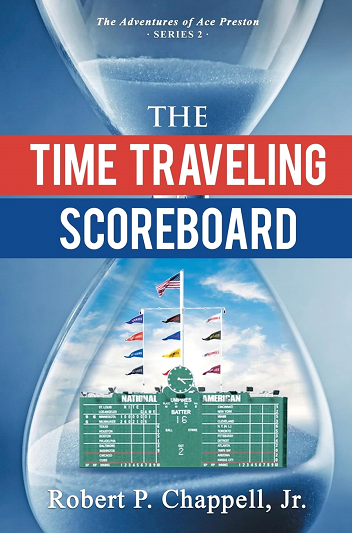
Step Into the Adventure

Inside the world of The Time Traveling Scoreboard by Robert P. Chappell, Jr., every inning holds possibilities, every stadium hides secrets, and every choice echoes through history. It is a story of discovery, nostalgia, and the search for meaning when life enters a new chapter.

If you enjoy baseball, time travel, and stories where ordinary places become extraordinary, this journey is waiting for you.

Ready to step inside the scoreboard?

Discover the full adventure and follow Ace Preston as he travels through baseball history, hidden mysteries, and unforgettable moments that blur the line between past and present. Get your copy today!


5 Things to Keep in Mind While Adding Time Traveling Adventures to Your Story

5 Things to Keep in Mind While Adding Time Traveling Adventures to Your Story

Time travel is one of the most exhilarating storytelling devices, offering limitless opportunities to explore history, future possibilities, and the human experience. Yet, introducing time-travel adventures requires careful thought to keep your readers engaged and your narrative coherent. Here are five key considerations to make your story truly unforgettable.

1. Define the Rules of Time Travel

Every time-travel story needs a framework. Decide whether your characters can alter the past, if paradoxes exist, or if history is immutable. Clear rules prevent plot holes and keep readers invested. Whether it’s a mystical artifact, a futuristic machine, or a mysterious portal, consistency is key. Readers love the thrill of the impossible, but only if it feels believable within your story’s universe.

2. Ground the Adventure in Character Motivation

Time travel is more than just a plot device, it’s a mirror for your characters’ desires, regrets, or ambitions. Why does your character travel through time? Are they seeking redemption, adventure, or answers to unresolved mysteries? Like Ace Preston in The Time Traveling Scoreboard, characters are most compelling when their journeys reveal something about who they are, rather than merely serving as spectacle.

3. Weave in Historical or Futuristic Details

The magic of time travel often lies in immersing readers in a different era. Authentic details, clothing, language, technology, and culture enrich the narrative and make the journey feel tangible. Research or imaginative extrapolation helps your world feel lived-in. When done well, readers not only follow the plot but also experience the time period firsthand.

4. Balance Action and Consequence

Every leap through time should have stakes. What happens if your character changes something? How do events ripple forward or backward? A story without consequences feels hollow, while one that shows the weight of time-travel choices creates tension and emotional investment. Remember, even small interactions in the past can have dramatic outcomes, making every decision meaningful.

5. Keep the Adventure Accessible

Time-travel stories can quickly become complex. Avoid overwhelming readers with endless timelines or confusing rules. Anchor the narrative in relatable experiences, emotions, relationships, or personal growth. Let readers explore the wonder of time alongside your characters, without losing the thread of the story.

Conclusion

Time travel is not just about bending the rules of history; it’s about bending perspectives, emotions, and imagination. When executed thoughtfully, it opens doors to adventures that entertain, inspire, and challenge both your characters and your readers.

For those seeking inspiration on blending historical richness, ethical dilemmas, and imaginative escapades, The Time Traveling Scoreboard by Robert P. Chappell, Jr. is a masterclass in time-travel storytelling. Follow retired hero Ace Preston as he navigates past eras, interacts with history, and discovers how even the smallest choices can change lives.

Step inside Ace Preston’s world and experience the magic of time travel. Your next story idea might just be waiting there. Get your copy today!

The Power of Self-Discovery: How Unexpected Journeys Reveal Our True Potential

The Power of Self-Discovery: How Unexpected Journeys Reveal Our True Potential

Life often surprises us with detours that push us beyond our comfort zones. While we may set out on a clear path, it is in the unexpected journeys, those moments of challenge, curiosity, and even confusion, that we discover who we truly are. Self-discovery isn’t a destination; it’s a journey, and the most profound revelations often come when we least expect them.

Embracing the Unknown

Stepping into the unknown can be intimidating. It challenges our routines, tests our resilience, and forces us to confront aspects of ourselves we might otherwise ignore. Yet, these moments of uncertainty are fertile ground for growth. When we venture beyond what we know, we uncover hidden talents, new perspectives, and a deeper understanding of our own values and priorities.

Consider how travel, immersive experiences, or even a new hobby can spark self-awareness. Each unfamiliar situation is a mirror, reflecting strengths and weaknesses that had previously gone unnoticed. The key is embracing these experiences with an open heart and a willingness to learn, rather than clinging to certainty.

Lessons from Unlikely Places

In life, the most transformative experiences often come from the most unexpected places. An encounter with a stranger, a challenge at work, or even a forgotten pastime can ignite a spark of self-realization. These experiences remind us that potential lies not in what we already know, but in how we respond to the unknown.

Such lessons are beautifully illustrated in stories where ordinary individuals are thrust into extraordinary circumstances. Through these narratives, we see that courage, creativity, and resilience are not reserved for the exceptional; they are cultivated when we dare to explore beyond the familiar.

The Courage to Evolve

Self-discovery requires courage, the courage to leave the comfort of the familiar and confront uncertainty. It demands that we acknowledge our limitations while also celebrating our achievements. By embracing growth and change, we redefine our potential, uncovering capabilities that might have remained hidden if we had stayed within our predictable routines.

Ultimately, self-discovery transforms not just how we see ourselves, but how we interact with the world. It allows us to approach challenges with confidence, navigate uncertainty with grace, and pursue opportunities with clarity and purpose.

Start Your Journey Today

Books and stories have a unique power to inspire our own journeys of self-discovery. The Time Traveling Scoreboard by Robert P. Chappell, Jr. is a perfect example. Through the adventures of Ace Preston, a retired law enforcement officer and Army Reserve veteran, readers witness how curiosity, courage, and integrity can unlock hidden potential. Ace’s journey shows that adventure and self-discovery are timeless; there’s always an opportunity to explore, learn, and grow, no matter where you are in life.

Discover how one unexpected encounter at a historic baseball stadium changes everything, revealing the power of embracing life’s surprises. Dive into The Time Traveling Scoreboard and let your own journey of self-discovery begin today.

What Made the Baseball Golden Age So Legendary and Why It Still Matters

What Made the Baseball Golden Age So Legendary and Why It Still Matters

Long before high-definition broadcasts, advanced analytics, and massive modern stadiums, baseball experienced a period many fans still call the Golden Age of the game. Spanning the early decades of the twentieth century, this era helped establish baseball as America’s pastime and created traditions that still shape the sport today.

During this time, baseball was more than entertainment; it was a shared cultural experience. Communities gathered around the sport, filling stadiums or listening to games on the radio. Ballparks became places where fans from all walks of life came together to celebrate victories, endure heartbreaking losses, and witness moments that would become legendary.

Even decades later, the stories from this era still spark curiosity and admiration among baseball fans.

Legendary Players Who Became Cultural Icons

One of the defining characteristics of baseball’s Golden Age was the emergence of players whose names would echo throughout the sport’s history. Athletes like Babe Ruth, Ty Cobb, Lou Gehrig, and Walter Johnson didn’t just dominate the field, they captured the imagination of an entire nation.

These players became some of the first true sports celebrities. Newspapers covered their achievements in dramatic detail, and fans eagerly followed every game. Babe Ruth’s home runs redefined the power of the long ball, while Lou Gehrig’s consistency and dedication made him a symbol of perseverance.

Their performances turned baseball into something bigger than a game. They created stories that fans would tell for generations

Moments That Became Baseball Lore

Part of what makes the Golden Age so legendary is the unforgettable moments that became part of baseball folklore. One famous example is the “Homer in the Gloamin,” when Chicago Cubs outfielder Gabby Hartnett hit a dramatic home run at Wrigley Field in 1938 during a game that was growing dark at sunset. That swing secured a victory for the Cubs and remains one of the most celebrated moments in the franchise’s history.

Moments like that helped cement baseball’s reputation as a sport filled with drama and surprise. Fans never knew when the next legendary play would happen, which made every inning feel important.

The spirit of those moments still echoes today through modern Cubs legends such as Ernie Banks, whose enthusiasm for the game made him one of the most beloved players in baseball history, and Sammy Sosa, whose electrifying home run seasons brought excitement back to Wrigley Field decades later.

Although they played in different eras, these players carried forward the passion and magic that began during baseball’s early golden years.

Ballparks That Became Living Museums

Another reason the Golden Age remains so influential is the ballparks that were built during that time. Stadiums like Wrigley Field and Fenway Park became iconic venues where generations of fans gathered to watch the game.

These parks were filled with character, manual scoreboards, ivy-covered walls, and unusual outfield dimensions that gave each stadium its own personality. Unlike many modern stadiums, these ballparks reflected the neighborhoods that surrounded them.

Walking into one of these historic stadiums today can still feel like stepping back in time.

Why the Golden Age Still Matters Today

Baseball has evolved dramatically over the past century, yet the spirit of the Golden Age continues to shape how fans experience the game. The legends, traditions, and dramatic moments from that era created the foundation on which modern baseball was built.

From unforgettable home runs to beloved players and historic ballparks, the stories of baseball’s past continue to inspire new generations of fans. They remind us that the magic of the game isn’t just found in statistics or championships, it lives in the moments that connect fans across time.

For readers who enjoy exploring baseball’s past, The Time Traveling Scoreboard by Robert P. Chappell Jr. is a good fit. The novel captures the nostalgia that surrounds baseball’s past, an era when ballparks were neighborhood landmarks, scoreboards were operated by hand, and every game felt like a community event. By stepping into those earlier moments, Ace encounters the culture and spirit that defined the Golden Age of baseball. The story highlights how the sport was built not just by famous players, but also by the everyday fans, stadium workers, and communities who loved the game.

Through its blend of history and adventure, the book reminds readers that baseball’s past is never truly gone. The traditions, stories, and legendary moments from those early years continue to influence the sport today. In that way, The Time Traveling Scoreboard becomes more than just a fictional adventure; it becomes a celebration of baseball’s enduring legacy and the timeless connection between generations of fans. Get your copy today!

Ever Wanted to Relive the Game? Here’s How One Story Makes It Possible

Ever Wanted to Relive the Game? Here’s How One Story Makes It Possible

Every baseball fan has imagined it.

What if you could sit in the stands during a legendary game? What if you could watch history unfold, not on television or in a highlight reel, but right there, in the stadium?

Picture it: the smell of the grass, the roar of the crowd, the tension before the pitch, and the crack of the bat echoing across the ballpark.

For generations, fans have replayed baseball’s greatest moments in their minds. But one story asks a bold question: What if you could actually step inside those moments? That’s exactly the journey readers experience in The Time Traveling Scoreboard by Robert P. Chappell Jr.

A Ballpark Visit That Changes Everything

Life after retirement can be an adjustment, especially after decades spent in demanding careers. Ace Preston knows that feeling well. After serving nearly forty years in law enforcement and twenty-five years in the U.S. Army Reserve, he suddenly finds himself navigating a life without the routines that once defined his days.

Looking for something meaningful to do, Ace decides to visit one of baseball’s most iconic places, Wrigley Field in Chicago. For baseball fans, walking through a historic stadium can feel like stepping into a living piece of history. Every corner of the ballpark carries stories from the past.

While exploring the famous ivy-covered outfield wall during a stadium tour, Ace notices something unusual tangled within the vines. It turns out to be an old metal number from the ballpark’s historic manual scoreboard. Determined to return the artifact, he climbs inside the scoreboard structure.

That simple act leads to something no one could have predicted.

A Scoreboard That Opens the Past

Inside the scoreboard, something strange happens when Ace looks through one of the viewing windows. The stadium outside no longer looks modern. The uniforms are different. The crowd appears dressed in clothing from another era. The atmosphere feels like it belongs to a completely different time.

What Ace discovers is both unbelievable and thrilling. The scoreboard is more than just a relic of baseball history, it is a gateway that allows him to travel through time and witness the game’s past firsthand.

Instead of reading about historic teams or legendary seasons, Ace finds himself standing in the middle of them. The sounds, the players, and the excitement of earlier eras come alive in ways that few fans could ever imagine.

Baseball History Comes Alive

Experiencing the past changes the way Ace views the game. Moments that once seemed distant suddenly feel immediate and real. The players are no longer just names in record books, and the stadiums feel alive with energy and emotion.

These journeys reveal more than just baseball history. Encounters with people from different eras introduce unexpected challenges, mysteries, and decisions that force Ace to think about the role he plays in these moments. Seeing history unfold from the inside offers a new perspective on the people and events that shaped the sport.

Through these experiences, Ace also begins rediscovering something he thought retirement had taken away: a renewed sense of purpose.

A Journey Through Baseball’s Most Memorable Moments

Baseball has always been about more than statistics and championships. It is about memories, traditions, and the moments that stay with fans for a lifetime. Stories that bring those moments back to life hold a special place in the hearts of baseball lovers.

The Time Traveling Scoreboard by Robert P. Chappell Jr. provides a unique way to explore the game’s past while following a journey filled with adventure, nostalgia, and discovery. Through Ace Preston’s unexpected travels, readers are transported into historic moments that shaped the sport and the people who lived them.

For anyone who has ever imagined witnessing baseball history firsthand, this story offers a chance to experience that dream through an unforgettable adventure. Get your copy today!

Meet Ace Preston: The Man Who Stepped Inside Baseball History

Meet Ace Preston: The Man Who Stepped Inside Baseball History

Every compelling story begins with a character searching for purpose. In The Time Traveling Scoreboard, that character is Ace Preston, a retired law enforcement officer and Army Reserve veteran who spent decades serving his country and community. At sixty-two years old, Ace suddenly finds himself facing a challenge many people encounter after retirement: what comes next?

For years, Ace’s life was defined by structure, duty, and responsibility. His days were filled with missions, investigations, and leadership. But when retirement arrives, the quiet becomes unfamiliar. The routines that once gave his life meaning disappear, leaving him searching for a new path forward.

Little does Ace know that his next chapter will lead him somewhere extraordinary, into the very history of baseball itself.

The Moment Everything Changed

Ace’s journey begins with a simple bucket-list goal: visiting one of baseball’s most iconic ballparks, Wrigley Field in Chicago. As a lifelong fan of the sport, the opportunity to walk the field and experience its rich history is something he has dreamed about for years.

During a stadium tour, Ace discovers an unusual artifact tangled in the famous ivy-covered outfield wall, a metal number from the stadium’s historic manual scoreboard. Determined to do the right thing, he climbs inside the scoreboard to return it.

What happens next changes everything.

Inside the scoreboard, Ace meets a mysterious operator named Ron, who invites him to watch the game through a small viewing window. But when Ace looks out, he doesn’t see a modern baseball game. Instead, he finds himself watching a game from 1915, featuring the Chicago Whales of the Federal League.

In that moment, Ace realizes something incredible: the scoreboard is a portal through time.

Stepping Into Baseball’s Greatest Moments

From that first discovery, Ace Preston becomes more than just a spectator. With each window he opens inside the scoreboard, he finds himself transported into different moments in baseball history.

But Ace doesn’t simply watch history unfold, he becomes part of it.

In one adventure, he finds himself in early twentieth-century Chicago, where he meets a young businessman whose financial future hangs in the balance. In another, Ace travels to Boston and helps uncover a mystery surrounding a stolen piece of Red Sox history tied to Ted Williams.

Each journey places Ace in the middle of fascinating stories involving real locations, historical events, and unforgettable characters. Along the way, he uses his life experience, integrity, and sense of duty to help people in ways that ripple far beyond the game itself.

A Character Fans Can Root For

What makes Ace Preston such a compelling character is his authenticity. He isn’t a superhero or a professional athlete. Instead, he’s someone readers immediately recognize—a hardworking individual who devoted his life to service and now finds himself rediscovering adventure later in life.

Ace’s love for baseball reflects the passion shared by millions of fans. His curiosity, sense of humor, and commitment to doing the right thing make him the kind of hero readers want to follow on every new adventure.

Through Ace, readers experience baseball history not as distant events, but as living moments filled with excitement, mystery, and meaning.

A Journey Through Time and the Spirit of the Game

Ace Preston’s story is ultimately about more than baseball. It’s about rediscovering purpose, embracing new adventures, and realizing that life’s most exciting chapters can begin when we least expect them.

Through the magical windows of a historic scoreboard, Ace steps into the past, but in doing so, he finds a future filled with purpose, discovery, and unforgettable experiences.

Step Into the Adventure

If you love baseball history, thrilling mysteries, and unforgettable characters, The Time Traveling Scoreboard by Robert P. Chappell Jr. invites you to join Ace Preston on a journey unlike any other. Pick up your copy of The Time Traveling Scoreboard today and see what happens when one man steps inside baseball history.

Why Sports Fiction Continues to Capture the Heart of Baseball Fans

Why Sports Fiction Continues to Capture the Heart of Baseball Fans

Baseball has always been more than just a sport; it is a game deeply woven into the cultural and emotional fabric of its fans. From childhood memories of playing catch to the excitement of a packed stadium on a summer evening, baseball evokes nostalgia and passion. Sports fiction taps into this emotional connection, transforming real-life experiences into compelling narratives. Through fictional stories, readers relive the thrill of the game while exploring deeper themes such as perseverance, friendship, and personal growth.

Unlike many other sports, baseball carries a timeless quality. Its slower pace allows space for reflection, emotion, and storytelling. That rhythm makes it the perfect backdrop for fiction that blends drama, history, and human experience. For many fans, sports fiction becomes a way to reconnect with the spirit of the game even when they are far from the ballpark.

Blending History with Imagination

One of the most powerful aspects of baseball fiction is its ability to merge historical moments with imaginative storytelling. Baseball’s rich history includes legendary players, iconic stadiums, and unforgettable games. Writers often use these real elements to ground their stories in authenticity while weaving fictional characters and adventures into the narrative.

This blend of fact and imagination allows readers to explore different eras of baseball—from the early days of the sport to modern stadiums filled with cheering fans. Through fiction, readers can experience historic moments from a new perspective, often discovering stories that highlight the human side of athletes and fans alike.

Characters Fans Can Relate To

Another reason sports fiction resonates so strongly with baseball fans is the relatable characters found within these stories. Many protagonists are everyday individuals, retired players, lifelong fans, or people searching for purpose, who rediscover meaning through the game they love.

These characters often face personal challenges that go far beyond the baseball field. Whether overcoming setbacks, rediscovering passion, or helping others, their journeys reflect the emotions and struggles that readers themselves experience. Baseball becomes the setting where personal growth, resilience, and unexpected friendships take shape.

The Mystery and Adventure of the Game

Baseball fiction often introduces elements of mystery and adventure, adding excitement beyond the game itself. Hidden clues, historic secrets, and unexpected discoveries frequently drive these stories forward, giving readers something more than just a sports narrative.

From legendary artifacts and forgotten stadium stories to adventures that cross decades of baseball history, these plotlines add depth and intrigue. The result is a reading experience that feels both nostalgic and thrilling, reminding fans that baseball is not only a sport but a living story full of possibilities.

A Celebration of Baseball’s Timeless Appeal

Ultimately, sports fiction continues to captivate baseball fans because it celebrates everything people love about the game, its traditions, history, and unforgettable moments. Through storytelling, writers preserve the magic of baseball while inspiring readers to see the sport through fresh eyes.

Whether exploring historic ballparks, meeting unforgettable characters, or uncovering mysteries tied to the game’s past, baseball fiction keeps the spirit of the sport alive for generations of fans.

Discover the Adventure for Yourself

If you enjoy baseball stories filled with history, mystery, and unforgettable adventures, The Time Traveling Scoreboard by Robert P. Chappell Jr. offers a unique journey through the game’s past. Through the journey of Ace Preston, a retired veteran searching for purpose, the novel allows readers to step into different eras of the game and experience legendary moments from the inside rather than simply reading about them.

The story blends real baseball history, iconic ballparks, and imaginative storytelling, giving fans a chance to relive the excitement and atmosphere of earlier generations of the sport. By combining mystery, time travel, and the enduring spirit of baseball, the book captures exactly what sports fiction does best, transforming the love of the game into a vivid and unforgettable narrative. Grab your copy and experience baseball history like never before.